

Amazon FBA East Coast Pallet Delivery: LTL vs FTL Cost Guide for Sellers (2026)
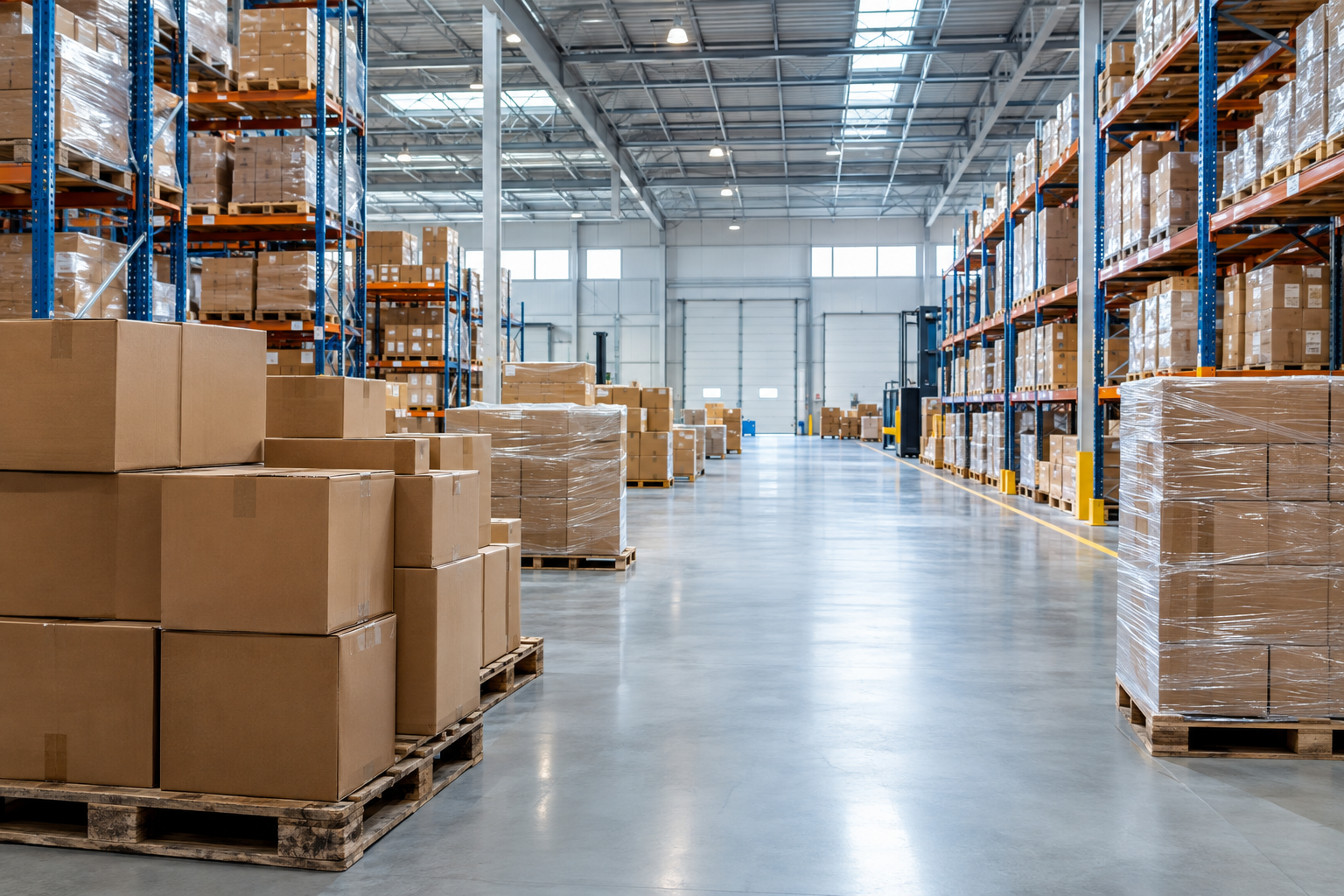
For Amazon sellers, a pallet is not simply a box of inventory on a bigger skid. The freight mode you choose—less-than-truckload (LTL), full truckload (FTL), or partial truckload—changes your pickup cost, damage exposure, appointment risk, and the amount of working capital tied up in inbound inventory.
That decision matters most on East Coast FBA shipments. A load moving from Pennsylvania or New Jersey to an Amazon fulfillment center may travel only a few hundred miles, yet a bad freight class, an inaccurate pallet dimension, a liftgate charge, or a missed appointment can erase the savings from a low base rate. This guide gives sellers a practical 2026 framework for comparing modes, building a quote, and deciding when a 3PL consolidation is cheaper than arranging every shipment independently.
Quick answer: which mode should an FBA seller use?
| Shipment profile | Best starting point | Why |
|---|---|---|
| 1–5 pallets, usually below 5,000–8,000 lb | LTL | You buy only the trailer capacity you use, with access to Amazon-partnered options. |
| 6–12 pallets or a dense shipment with awkward cube | Quote LTL and partial truckload | The shipment sits in the pricing gap where LTL handling can be expensive but a full trailer is not justified. |
| 13–26 standard pallets, or a shipment filling most of a trailer | FTL or Amazon-partnered FTL | Fewer handling events, better control over loading, and a lower cost per pallet when the trailer is well utilized. |
| Recurring small inbound orders | 3PL consolidation | Combines purchase orders and tenders freight on a repeatable lane instead of buying one-off transportation. |
These are decision bands, not Amazon rules or guaranteed carrier thresholds. Amazon’s own partnered-carrier documentation says shipments over 12 pallets are rolled into an FTL shipment in that program, while the correct choice still depends on weight, freight class, dimensions, stackability, pickup capacity, and the assigned destination.
What LTL, partial truckload, and FTL actually mean
LTL: less-than-truckload
LTL freight moves with other shippers’ freight through a terminal network. It is usually the right starting point for a few standard pallets, especially when the shipment is too large for small parcel but nowhere near a full trailer. The price is shaped by weight, pallet dimensions, freight class, distance, fuel, and carrier capacity—not weight alone. Freightquote’s LTL guidance also warns that bulky, light freight can receive a higher class and cost more per pound.
LTL’s tradeoff is handling. A pallet may be unloaded and reloaded multiple times before it reaches an Amazon facility. Use a sound pallet, corner protection, stretch wrap, straps where appropriate, and outward-facing carton labels. Do not treat a carrier quote as a complete landed cost until you have checked fuel, residential or liftgate service, limited-access fees, appointment requirements, reclassification exposure, and claims terms.
Partial truckload or volume freight
Partial truckload (PTL), volume LTL, and consolidated truckload are overlapping labels rather than one universal product. In practice, you are asking a carrier or broker to price a shipment that is too large or too space-intensive for ordinary LTL but does not need an entire trailer. The carrier may quote by linear feet, pallet count, weight, or a lane-specific minimum.
PTL can reduce terminal handling and damage risk. It can also create quote ambiguity: two carriers may describe the same 10-pallet shipment differently, and accessorials may be billed after pickup if the quoted dimensions or stackability were inaccurate. Ask whether the price includes dock-to-dock service, appointment delivery, detention, fuel, liftgate, and any reweigh or reclass process.
FTL: full truckload
FTL reserves a trailer for one shipment or one shipper’s consolidated load. It is attractive when the shipment fills enough of a trailer to spread the linehaul across many pallets, when the inventory is damage-sensitive, or when the seller needs a more predictable direct move. FTL does not automatically mean “one price with no surprises.” You still need correct pallet counts, a usable bill of lading, a carrier appointment, and any required seal information.
Amazon’s seller requirements for LTL and FTL deliveries specify that non-small-parcel shipments must be palletized, use valid shipment documentation, and follow pallet, labeling, and delivery rules. Amazon’s Partnered Carrier program also states that FTL and intermodal shipments cannot exceed 44,000 lb and that sellers must provide shipment details such as pallet count, weight, height, stackability, and freight class.
2026 East Coast pallet cost model
There is no single “East Coast pallet rate.” A real quote is a lane-specific contract between an origin, a destination fulfillment center, a shipment profile, and a carrier’s available capacity. Use the following model to compare offers without confusing a low linehaul rate with a low delivered cost.
| Cost component | How to calculate it | What commonly changes the number |
|---|---|---|
| Linehaul | Base charge for the origin-to-destination move | Miles, lane balance, equipment, day of pickup, and carrier capacity |
| Fuel | Carrier surcharge or included all-in rate | Diesel index, contract terms, and whether the quote is linehaul-only |
| Freight-class cost | Weight and cube converted into a class rating | Density, NMFC classification, packaging, and reclassification |
| Accessorials | Add each service required at pickup or delivery | Liftgate, limited access, inside delivery, notification, detention, redelivery |
| Amazon appointment risk | Budget labor and possible rescheduling exposure | Carrier Central appointment, FC capacity, late arrival, and paperwork errors |
| 3PL handling | Receiving, pallet build, consolidation, labels, and outbound dispatch | SKU count, prep work, storage days, and number of destinations |
For a first-pass budget, request three comparable quotes using identical inputs: origin ZIP, Amazon destination or shipment ID, pallet count, exact dimensions, gross weight, stackability, freight class, ready date, and required delivery date. Then compare the all-in cost per pallet:
All-in cost per pallet = (linehaul + fuel + accessorials + 3PL freight handling + expected exception cost) ÷ pallets delivered.
As a sanity check, published LTL examples show why the arithmetic is not linear: a 500-lb pallet can cost less than a 250-lb pallet when its class and density are more favorable. Treat online examples as directional only. DAT Trendlines publishes national market averages and explains that its figures are market averages derived from freight transactions; they are useful for understanding capacity and fuel direction, not for substituting for a quote on your Amazon lane.
Illustrative planning bands for East Coast FBA
For internal planning—not a carrier quote—many sellers can start with a spreadsheet that tests three scenarios:
- LTL base case: price each pallet independently, then add fuel and a conservative accessorial reserve. This is usually the most flexible option for one to five standard pallets.
- Partial-load case: request a quote by pallet and linear feet for six to 12 pallets. Compare the full delivered total, not only the per-pallet figure.
- FTL case: request a dedicated trailer rate and divide it across the loaded pallets. A half-empty trailer can look attractive on a per-mile quote but expensive per pallet.
For a short Pennsylvania-to-Northeast lane, a 3PL may lower the total even when its handling fee is visible because it can consolidate several sellers’ or several purchase orders’ freight, tender a denser load, and reduce repeated appointment and paperwork work. For a longer move down the I-95 corridor, compare direct FTL, partial truckload, and Amazon-partnered options on the same ready date. Capacity can change the ranking from week to week.
Amazon requirements that affect your freight quote
Build the pallet to Amazon’s specification
Amazon’s published requirements call for 40 × 48-inch, four-way-access wooden pallets, generally GMA Standard B Grade or higher. Broken or damaged pallets can be rejected at the seller’s expense. Keep one shipment ID on each pallet, separate ASINs or SKUs clearly, and make FBA box ID labels visible to receiving teams.
For FTL and intermodal shipments, Amazon requires an ISO-17712-compliant, Amazon-approved RFID seal at pickup under the current requirements. The seal number must be recorded on the bill of lading with the shipment identifiers. Make this a line item on the dock checklist; a driver can refuse pickup if the trailer is not sealed or the BOL is missing the seal number.
Do not omit the operating details
Your quote request should state whether pallets are stackable, whether a dock and forklift are available, and whether liftgate service is needed. Amazon’s partnered-carrier guidance says a seller must be able to accommodate a 53-foot trailer unless an eligible box-truck or liftgate alternative is arranged. That is why an origin warehouse, prep center, or 3PL with a proper dock can be materially cheaper than a residential pickup.
Protect the appointment
Every Amazon pallet shipment needs a valid BOL and carrier appointment process. Confirm the PRO number, pallet count, weight, freight class, ship-from address, ship-to address, and appointment status before the truck departs. Keep a timestamped photo of the loaded pallets and seal, plus a copy of the signed BOL.
How ELD and hours-of-service rules affect delivery timing
Electronic logging devices do not set your freight price by themselves, but they limit how a driver can recover from a late pickup, weather delay, terminal congestion, or missed appointment. The Federal Motor Carrier Safety Administration’s HOS summary says property-carrying drivers may drive up to 11 hours after 10 consecutive hours off duty, must finish driving within a 14-hour on-duty window, and must take a 30-minute interruption after eight cumulative hours of driving.
For East Coast FBA planning, translate those rules into operational buffers:
- Do not schedule a same-day pickup and Amazon appointment with no allowance for dock wait time.
- Give the carrier the earliest realistic ready time, not a time the warehouse cannot meet.
- For multi-stop or partial loads, ask how the carrier sequences stops and protects the Amazon appointment.
- For winter weather and holiday volume, add a day to the internal promise date even if the quoted transit time is shorter.
- Track dwell time at origin. A truck waiting several hours can lose the driving window needed to reach an appointment.
When FASTFBA3PL can improve the math
FASTFBA3PL operates from 474 Pike Road, Huntingdon Valley, Pennsylvania, with a 12,000-square-foot warehouse. The location is listed as 18.6 miles and approximately 31 minutes from Amazon ABE8, with 19 fulfillment centers within two hours, 38 within four hours, and 45 within eight hours. That proximity does not guarantee the lowest freight rate, but it gives sellers a practical consolidation point near a dense cluster of East Coast destinations.
For an inbound program, compare your current process with a 3PL scenario:
- Receive cartons or supplier freight at the 3PL.
- Verify counts, dimensions, labels, and pallet condition.
- Combine compatible purchase orders or ASIN shipments where Amazon permits.
- Build stable, labeled pallets and capture weight and dimensions.
- Quote LTL, PTL, and FTL against the same destination and ready date.
- Dispatch with the correct BOL, appointment details, seal record, and tracking.
Start with FASTFBA3PL’s location-advantage analysis and compare the labor and exception costs against your current process. If you are still deciding whether to outsource prep, use the FBA prep versus DIY cost comparison before judging a 3PL only by its per-pallet handling fee.
East Coast pallet shipping checklist
- Confirm the Amazon destination, shipment ID, ship mode, and required delivery date.
- Measure and weigh every pallet after wrapping; record height, gross weight, and stackability.
- Use acceptable 40 × 48-inch wooden pallets unless the product requires a documented exception.
- Verify freight class and product density before accepting the quote.
- Request an all-in quote that identifies fuel, liftgate, appointment, limited-access, detention, and redelivery charges.
- Compare LTL, partial truckload, FTL, and Amazon-partnered options on the same inputs.
- Confirm dock, forklift, trailer, seal, BOL, and Carrier Central responsibilities.
- Photograph pallet condition, labels, seal, and signed paperwork.
- Keep a landed-cost-per-pallet record by lane so the next quote is based on your actual history.
Final takeaway
LTL is often the right entry point for a few East Coast FBA pallets, but it is not automatically the cheapest. Partial truckload becomes interesting as pallet count, cube, and damage risk rise. FTL wins when you can use enough of the trailer and protect the appointment. A capable Pennsylvania 3PL can add value by consolidating freight, building compliant pallets, and comparing modes against the same Amazon destination.
Want a lane-specific comparison? Contact FASTFBA3PL with your origin ZIP, Amazon destination, pallet count, dimensions, weights, ready date, and current quote. The more complete the shipment profile, the more useful the LTL-versus-FTL answer.